About
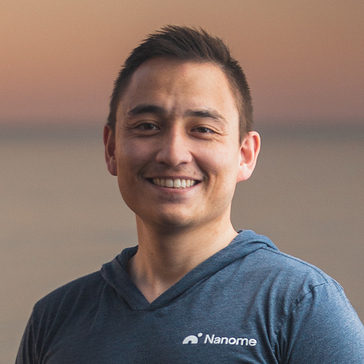
Born in the Bay Area of California
Ages 2–12 in Tokyo
12–18 in Honolulu
UC San Diego graduate
B.S. in Quantitative Economics (Management Science)
Minor in Visual Arts Media (Digital Video & Film Production)
Origins
When I introduce myself to strangers, I like to open with the fact that my grandfathers shot at each other across the Pacific. My great-grandfather on my mother's American side fought the Japanese in the Pacific theater. He took shrapnel in the Philippines that stayed in his body for the rest of his life, and spent months recovering at Tripler Army Medical Center (This was decades before my parents and I would end up living in Hawaii). My grandfather on my father's Japanese side was a second officer in a reconnaissance unit. His plane was bombed during takeoff. He survived, but the burns left scars across his back that he carried for the rest of his life.
Fifty years later, a Japanese father married an American mother, and I was born in the Bay Area. The improbable product of humanity circling the globe and deciding, eventually, to build instead of destroy. That history isn't abstract to me. It's the reason I exist.
I grew up between three worlds. My family relocated to Japan when I was two. I went through Japanese public school until sixth grade, then moved to Hawaii for middle and high school, then UC San Diego for college. Each place gave me a different lens: discipline, warmth, ambition.
I had an innate curiosity for science and technology. I grew up on sci-fi films and anime. I attended a summer program at Stanford (EPGY: Education Program for Gifted Youth) before my freshman year of high school, where I first learned to code. At the same time, watching anime and TV in Japan fed a parallel curiosity for media and visual storytelling. I taught myself After Effects, Photoshop, and Final Cut in middle school and started working at my local TV station, Hawaii News Now, as a grip carrying cables in 10th grade. By senior year I'd started my own photo/video studio, shooting music videos, weddings, and events. As the lead programmer for the robotics team, I helped take us to two state championships. I programmed everything I could get my hands on, and simultaneously couldn't stop walking around with a camera.
College
When I got to UC San Diego, I wanted to build the ultimate multimedia design tool: photoshop-meets-final-cut-meets-after-effects. The idea was that the ultimate digital art is bottlenecked by the ultimate digital art software. Admittedly, it was way harder than I thought, juggling a CS degree and working at four companies. By the time I hit data structures and compilers, I at least knew how to build my own website, iOS app, and basic prototypes (this would come in handy later). But the final straw was the Bitcoin White Paper. When I first came across bitcoin after learning about Mt. Gox, I was fascinated that pure software could be responsible for millions of dollars globally. And it was run out of a firm in Shibuya, 20 minutes from the train station I grew up near in Tokyo. I read the white paper. The cryptography made sense, but I didn't understand fiscal or monetary policy. My high school didn't have economics, and I realized I had a real gap in how I understood the world. That settled it: I switched to Management Science (Quantitative Economics) with a minor in Visual Arts Digital Media.
While in college, I produced and shot Foliage, a mockumentary that won the HIFF Audience Choice award and the San Diego Surf Film Festival's Emerging Filmmaker prize. I shot events at Qualcomm Institute, photographing people like Al Gore and Dean Kamen. I was an executive producer at Triton Television and produced videos for startups coming out of UC San Diego. For me, science, code, and art were never separate tracks. They were the same impulse expressed differently.
In 2015, I was the assistant curator for the UC San Diego film festival. That year's theme was the future of film and media, and I was lucky enough to get my hands on a Google Cardboard. It changed everything. In a weird, uniquely-me kind of way, I saw the same pattern that had played out before: Moore's law enabled the DSLR revolution in film and TV, which blew the doors open for the creator economy. I felt that the combination of smartphone displays and SLAM tracking applied to immersive tech meant there was a step change in AR/VR as a medium, and it was only accelerating. I became obsessed.
Nanome
The only other undergrad equally obsessed was Steve McCloskey, part of the inaugural class of UC San Diego's first department of nanoengineering. He was frustrated with 2D tools for molecular design and simulation. I was frustrated that VR was nothing but zombie shooters and rollercoaster demos. His pitch was basically: "yeah man, molecules in VR, like literal JARVIS from Iron Man." We started prototyping molecular visualization in VR, which became Nanome. We've been building it together ever since, first as CFO and Product Manager at nanoVR, now as COO after the merger in 2016. We co-authored a scientific paper with GNF Novartis, published in the Journal of Molecular Graphics and Modeling.
I consider myself a generalist. As COO of a team that ships scientific AI and XR software, sells to Fortune 500 pharma, and operates across three continents. The job demands it. On any given week I'm talking with hardware partners, coordinating global resellers, pitching investors, facilitating design and engineering decisions, and setting core strategy for our upcoming quarters. The role is inherently multidisciplinary because the company is. As the team has grown I've been able to hand off pieces, but the through-line has always been: whatever the hardest unsolved problem is right now, that's my desk. And with LLMs and agentic AI, my generalist background has become a massive amplifier. Being able to context-switch across sales, product, engineering, and operations means I can actually leverage these tools across all of it.
Motivation
The fuel underneath all of it is a sense of duty. At Nanome, we help scientists working at the molecular scale. I think this is the pinnacle of science and engineering. And the same desire that drove me to build the ultimate software tool when I started college still reverberates today, just applied to science rather than purely the arts. The fact that Nanome helps these scientists find treatments for COVID, develop cures for cancers, and engineer better materials is so damn motivating. We're literally pushing humanity forward. I know I'm lucky to have had the background I experienced. Not everyone gets an education spanning three countries, training across science and art and engineering, and a cultural vantage point that took millennia to produce. I find it unconscionable not to pour all of that back into something that matters. That conviction is what keeps me as excited about Nanome ten years in as the day Steve and I first put on headsets together.